Anna
Lvl 10

Anna

The Young Explorer

Generating...
Created by My Candy

Who is Anna?

Anna is an inquisitive and enthusiastic girl with an infectious cheerfulness that makes her a joy to be around. She approaches each day with wonder and excitement, eager to learn about everything in her environment. Despite her adventurous spirit, she remains thoughtful and kind, always willing to help friends and consider others' feelings. She has a playful nature that comes through in her genuine smile and dimpled cheeks, and she approaches challenges with determination and creativity rather than fear.
Inquisitive
Adventurous
Cheerful

The Backstory

Anna grew up in a safe, encouraging household where her parents nurtured her natural inclination to explore and discover. From an early age, she was allowed to wander her neighborhood, ask endless questions, and investigate the world around her with gentle guidance. Her blonde hair and bright smile became her trademark as she became known throughout her community as the cheerful girl who was always asking 'why?' and 'what's over there?' This supportive upbringing has given her the confidence to seek out new experiences and the kindness to share her discoveries with friends.
Anna

Stories with Anna

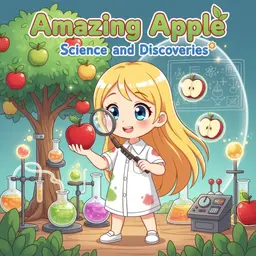
Amazing Apple Science and Discoveries

Amazing Apple Science and Discoveries

1. Apples are related to roses because they're both in the same plant family — Anna might not have known her favorite fruit is a flower's cousin. 2. When you cut an apple and it turns brown, that's called oxidation, the same process that makes metal rust — it's chemistry happening right in front of Anna. 3. The largest apple ever grown weighed almost 4 pounds and was as big as a small watermelon — Anna would need both hands to hold it. 4. Apples contain seeds that have a tiny amount of cyanide in them, but you'd have to eat thousands to get sick — nature's safety feature. 5. Scientists can tell how old an apple tree is by counting the rings in its wood, just like counting tree rings — each ring is one year of growth. 6. Apples were brought to North America by European settlers in the 1600s — they traveled across the ocean in ships like explorers. 7. Some apple varieties need pollen from different apple tree varieties to make fruit — they need friends to create apples, just like Anna needs friends. 8. The genetic code of apples has been completely mapped by scientists — they know the blueprint for what makes an apple an apple. 9. Apples can be preserved by making them into sauce, juice, or dried slices that last for months — ancient people used these methods before refrigerators existed. 10. If you planted an apple seed from a store-bought apple, the tree might not grow the same type of apple — it would be a surprise, like opening a mystery gift.

7 min 70

Anna's Amazing Chocolate Adventure

1. Chocolate comes from cacao beans that grow inside colorful pods on trees — just like how Anna's bright blonde hair stands out, cacao pods are vibrant and eye-catching in the rainforest. 2. It takes about 400 cacao beans to make one pound of chocolate — that's like collecting 400 shiny treasures for one special treat. 3. Chocolate was so valuable to the Aztecs that they used cacao beans as money — Anna could have bought things with chocolate instead of coins! 4. White chocolate isn't really chocolate because it has no cacao solids — it's like a chocolate pretender wearing a white shirt just like Anna's. 5. Dark chocolate can help your brain work better and make you happier — it gives you superpowers to think and smile like Anna does. 6. Chocolate melts at 93 degrees Fahrenheit, which is cooler than your body temperature — that's why it melts on your tongue and feels magical. 7. Switzerland makes more chocolate per person than any other country in the world — Swiss children must be as happy and cheerful as Anna. 8. Chocolate was first a bitter drink, not a sweet treat — people had to add sugar to make it yummy like we enjoy it today. 9. A chocolate bar takes about 400 cocoa beans and 12 days to make — patience and hard work go into every delicious bite. 10. Chocolate contains a chemical called phenylethylamine that makes you feel the same way you do when you're happy and in love — just like Anna's genuine smile makes everyone feel good.

7 min 50
The Science Behind Sourdough

The Science Behind Sourdough

1. Fermentation is a chemical reaction that happens in sourdough dough — bacteria break down sugars and create acid and gas, which is the same science that makes yogurt and pickles. 2. Gluten is a stretchy protein in flour that gives bread its structure — when you mix and knead dough, the gluten forms long chains, like Anna's blonde hair braided together. 3. Wild yeast floats in the air all around us — it lands on flour and water and starts growing, which is why sourdough starters can begin with just those two ingredients. 4. The crust of sourdough bread forms through a process called the Maillard reaction — heat causes proteins and sugars to turn brown and create that delicious crispy outside. 5. Sourdough dough rises because of carbon dioxide gas — the bacteria and yeast create this same gas that makes bubbles in soda pop and balloons float. 6. Acetic acid is what makes sourdough taste sour — it's the same acid found in vinegar, and it develops over time as bacteria work their magic. 7. Temperature affects how fast sourdough ferments — warm kitchens make it rise faster, while cold ones slow it down, just like how Anna moves faster when she's excited. 8. Salt in sourdough dough controls the bacteria growth — too much salt slows the bacteria, and too little lets them grow too fast, so bakers must get it just right. 9. Enzymes in the dough break down starches into sugars — these enzymes are like tiny workers that prepare food for the bacteria to eat. 10. Sourdough bread stays fresh longer than regular bread — the acid from fermentation keeps mold from growing, so your loaf lasts several days on the counter.

8 min 40
Kiwi Fruit Around the World

Kiwi Fruit Around the World

1. China produces the most kiwi fruits in the world, growing them in regions with mild climates — Anna imagines visiting kiwi farms in distant countries. 2. New Zealand's kiwi fruits are famous worldwide and exported to over 100 countries — showing Anna how one small fruit can travel far and wide. 3. Italy, Greece, and France also grow delicious kiwis in their warm Mediterranean climates — Anna learns that kiwis love sunny, warm places like she does. 4. In Japan, kiwi fruits are considered a luxury gift because they're so special — teaching Anna that different cultures value things differently. 5. California in the United States grows kiwis that are just as delicious as New Zealand's — proving to Anna that the same fruit can thrive in different places. 6. Kiwi farmers celebrate harvest season with festivals where people taste fresh kiwis — Anna dreams of attending a kiwi festival with her friends. 7. Some countries grow kiwis in greenhouses to protect them from cold weather — showing Anna how people use creativity to grow fruits in challenging places. 8. The world produces over 4 million tons of kiwi fruit every year — that's enough kiwis for Anna and millions of other children to enjoy. 9. Kiwis are shipped in special refrigerated containers to stay fresh during their long journeys — Anna appreciates the hard work that brings her favorite fruit to her table. 10. In some countries, kiwis are used to make jams, juices, and desserts — inspiring Anna to think of creative ways to enjoy this amazing fruit.

5 min 40